Balayage vs. Highlights for Curly Hair: What You Should Know
Original published date: Apr 29, 2022
Major Update Date: Jul 10, 2026
Coloring curly hair doesn't have to mean sacrificing your curl pattern or risking severe damage. When applied with texture-specific expertise, adding dimension can make your curls pop with movement, depth, and vibrant personality. But when choosing between balayage and traditional highlights, which technique is actually best for your unique curl type?
At The Glam House, recognized as the best hair salon in Denver, our master stylists work with diverse hair textures daily. Here is your definitive, expert-backed guide to safely coloring curly hair while preserving its natural health.
Quick Summary: Balayage vs. Highlights for Curly Hair
| Feature | Balayage | Traditional Highlights |
|---|---|---|
| Technique | Freehand surface painting for a soft gradient | Foil separation to lighten selected strands from root to tip |
| Best For | Waves, loose curls, and low-maintenance goals | Coils, tight ringlets, and high-contrast dimension |
| Grow-Out Line | Seamless; no harsh demarcation line | Noticeable at the root as natural hair grows in |
| Maintenance | Low (Touch-up every 12–16 weeks) | Moderate to High (Touch-up every 8–10 weeks) |
| Hair Health Risk | Lower (Less saturation, open-air processing) | Moderate (Foils trap heat and process lightener faster) |
The Science of Curly Hair: Why Technique Matters
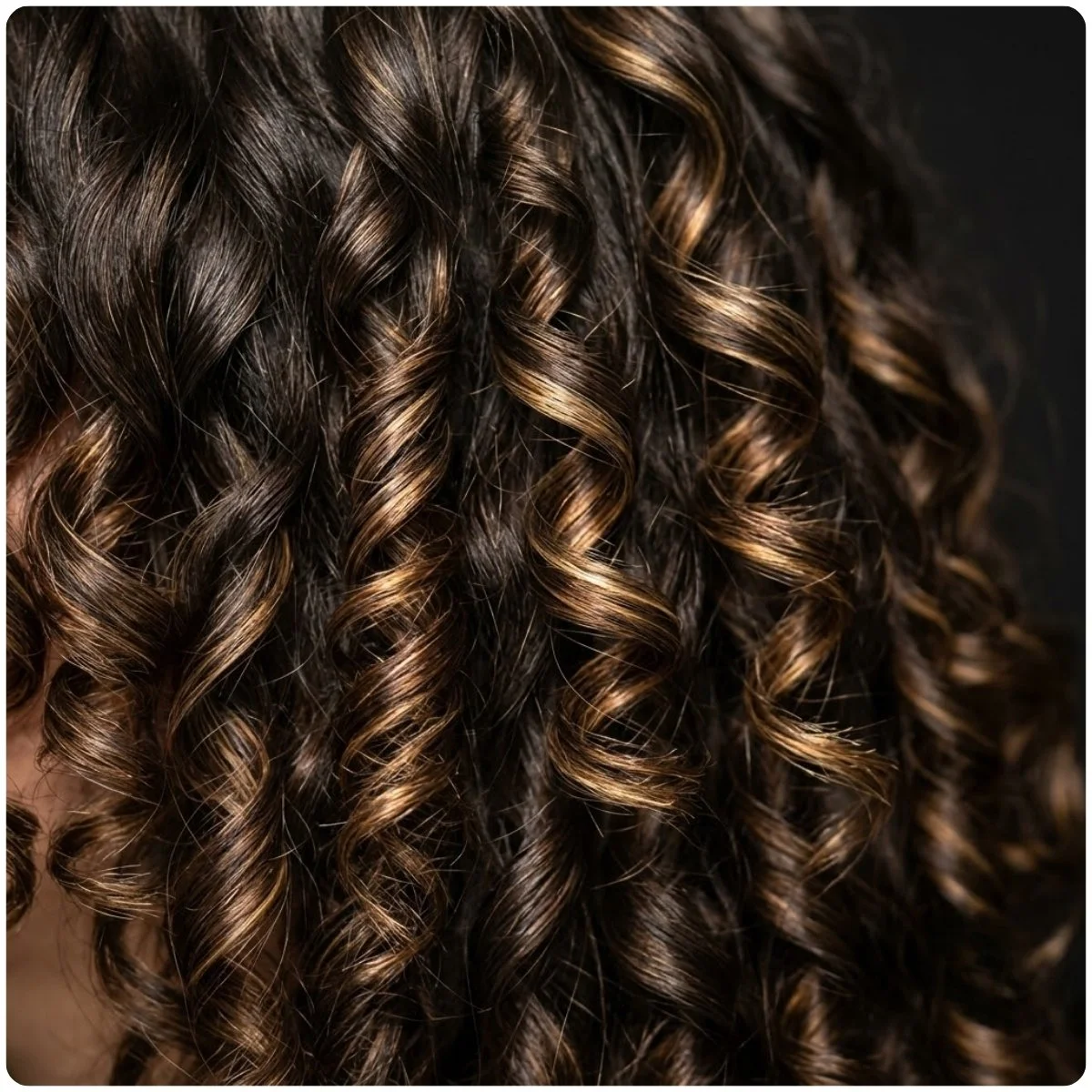
Curly hair behaves differently than straight hair due to its structural anatomy. The follicles on your scalp are oval or asymmetrical, causing the hair shaft to twist and curve as it grows.
This spiral structure creates two critical hair care challenges: slower oil distribution and fragile cuticle points.
According to dermatological research and expert guidelines on textured hair, the irregular cuticle structure in curly hair increases porosity and vulnerability to moisture loss during chemical services like coloring. This makes proper technique and bond-protecting additives essential to minimize damage and preserve curl elasticity.
Choosing the right hair color service is a delicate balancing act. A technique tailored to your curl pattern elevates texture and shine, whereas an improper application can cause dryness, loss of elasticity, or chemical damage.

— ERICA Master Color Specialist, The Glam House Denver
Before You Color: Hair Porosity & Pre-Salon Prep
Before booking your color transformation, understanding your hair's porosity ensures your stylist can choose the ideal formula for your curls.
Understanding Curl Porosity
High Porosity Curls: Hair with raised cuticles absorbs color rapidly but loses moisture quickly. Stylists usually apply gentle, lower-volume developers alongside bond-building treatments to protect the hair shaft.
Low Porosity Curls: Tightly closed cuticles resist chemical absorption. Low porosity curls may require a bit more time or controlled warmth to allow the lightener to penetrate evenly.
How to Prepare Curls for a Color Appointment
Deep Condition One Week Prior: Nourish your curls with a protein- or moisture-rich deep conditioning mask 7 days before your service to boost elasticity.
Clarify 48 Hours Before: Wash your hair with a clarifying shampoo two days before your visit to remove heavy gels, butter, and silicone build-up.
Arrive with Dry, Unbound Curls: On salon day, wear your hair down in its natural state without tight hair ties or heavy raw oils, allowing your colorist to see how your curls naturally fall.
What is Balayage for Curly Hair?
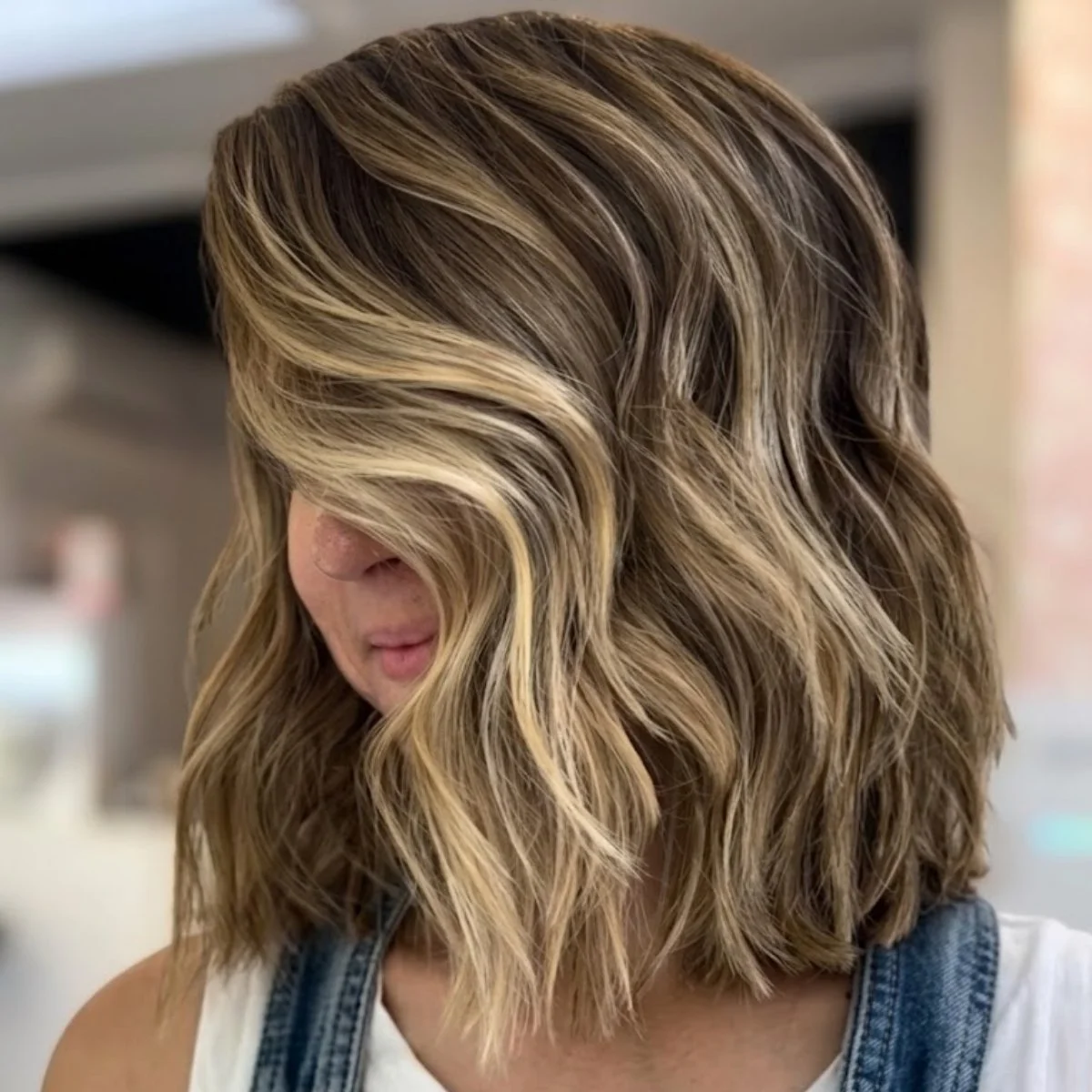
Balayage, derived from the French word meaning "to sweep," is a freehand hair painting technique. Instead of saturating the entire hair strand from root to tip, the stylist sweeps color onto the surface of selected sections, building brightness toward the ends.
Why Balayage Works for Curls
Sun-Kissed Dimension: It creates a natural gradient that mimics how natural sunlight highlights your hair.
Seamless Grow-Out: Because the color is feathered toward the root, there is no harsh line of demarcation as your hair grows.
Customized Lightening: For S-shaped waves and loose curls, balayage creates soft depth without disrupting the overall pattern.
What are Highlights for Curly Hair?
Traditional highlights involve selectively lightening strands of hair using aluminum foils to create a multi-dimensional, structured look. The foils isolate the hair and trap heat, allowing the lightener to penetrate deeply and deliver precise, uniform color from root to tip.
Tailoring Highlights for Curls
To avoid a blocky or "striped" look on textured hair, professional stylists customize foil placements based on your specific curl pattern rather than following standard straight-line sections.
By strategically placing lightener along individual curl clusters, your colorist ensures the highlights work with the movement of your hair. This brings out a defined, ribbon-like contrast that makes each ringlet or coil stand out.
Key Differences: Balayage vs. Highlights
1. Visual Effect & Dimension
Balayage: Delivers a soft, blended transition with darker roots and lighter ends. Best for a lived-in, effortless look.
Highlights: Delivers targeted pop and contrast from root to tip, making individual curls stand out distinctly throughout the entire hair profile.
2. Maintenance & Salon Visits
Balayage: Highly low-maintenance over time. Expect touch-ups only every 12 to 16 weeks.
Highlights: Require touch-ups every 8 to 10 weeks to maintain root blending and brightness as your hair grows out.
3. Hair Integrity & Lift Potential
Balayage: Processes in open air, which slows down the lightening process. It is gentler but typically achieves 2–3 levels of lift in one session.
Foil Highlights: Foils trap heat, allowing the lightener to penetrate deeper and achieve higher levels of lift (ideal if you are transitioning from dark hair to blonde).
How to Maintain Colored Curly Hair
Protecting your investment requires a routine focused on hydration and color preservation:
Use Sulfate-Free Cleansers: Standard sulfates strip natural oils and fade hair color prematurely. Switch to color-safe, sulfate-free shampoos.
Weekly Deep Conditioning: Incorporate a deep conditioning treatment once a week to restore lost moisture and maintain curl bounce.
Incorporate Bond Builders: Products containing bond-repair technology help rebuild disulfide bonds damaged during chemical processing.
Apply Heat Protectant: Always apply a heat protectant serum or cream before diffusing your curls or exposing them to UV rays.

Conclusion
Choosing between balayage and highlights comes down to your desired look, maintenance preferences, and curl pattern. Balayage offers a low-maintenance, blended finish, while tailored highlights offer a high-contrast dimension that defines individual curls from root to tip.
Ready to elevate your curls safely? The expert team at The Glam House provides customized color consultations designed specifically for textured hair. Contact us today to book your consultation!
Frequently Asked Questions
-
Custom hand-painted or visually placed highlights are ideal for curly hair. When a stylist places lightener according to how your curls naturally clump together, it enhances your unique pattern without creating harsh lines or disrupting your natural texture.
-
Yes, balayage looks exceptional on naturally curly hair. The painted gradient adds rich depth and dimension, creating a soft, sun-kissed look that highlights the natural movement of waves and loose curls.
-
Generally, yes. Balayage features a soft, feathered root transition that blends seamlessly with your natural hair color, making the grow-out process look natural and intentional compared to traditional foil highlights.
-
Balayage typically requires touch-ups every 12 to 16 weeks, while traditional highlights require maintenance every 8 to 10 weeks. Using gloss treatments between color appointments can help maintain vibrancy without over-processing your curls.
Read more…