Best Curly Haircuts for Every Face Shape: 2026 Expert Guide
Original published date: Jun 17, 2023
Major Update Date: Jul 20, 2026
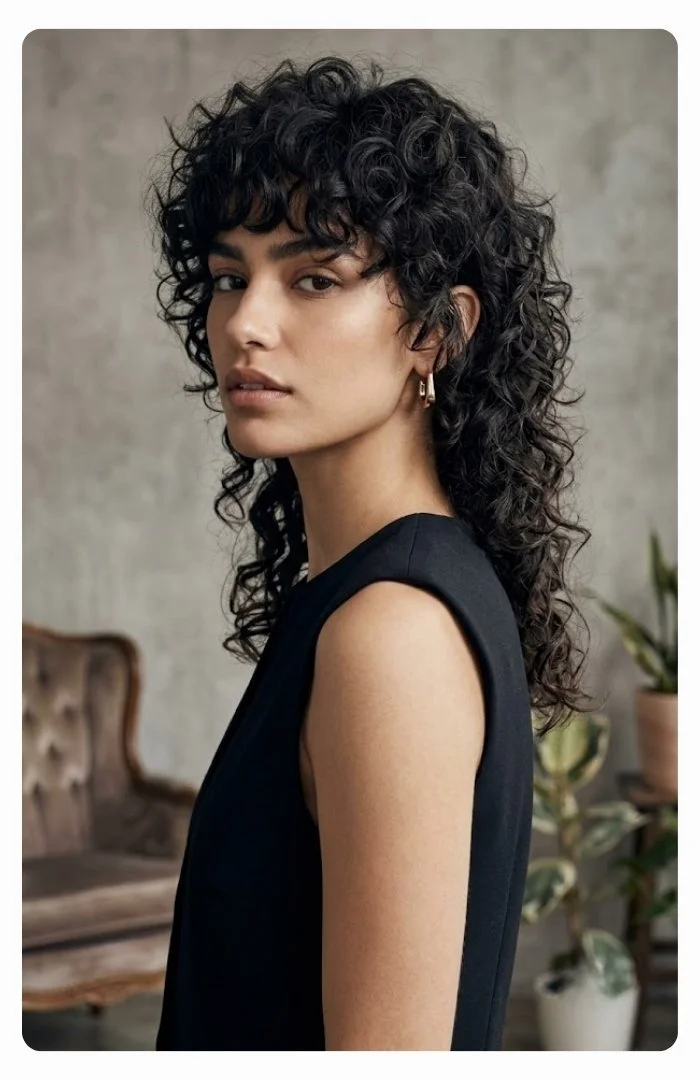
Let me tell you, as someone who has navigated the wild world of curls, getting the right haircut is everything. It’s the difference between fighting your hair every morning and waking up to bouncy, effortless volume. When you book an appointment at the best hair salon, you should expect more than just a standard trim. A great curly cut is an art form—it’s about understanding exactly how the geometry of your face interacts with the natural shape of your curls to deliver a look tailored specifically to you.
Step 1: Identify Your Face Shape
Before you sit in the salon chair, you need to know your canvas. Pull your hair back, look in the mirror, and observe the proportions of your forehead, cheekbones, and jawline. Whether you're rocking loose 2A waves or tight 4C coils, finding a style tailored to your face shape can elevate your entire look. If you are still unsure about your specific texture before heading to the salon, checking out a comprehensive guide to identifying your exact curl pattern can help you and your stylist speak the same language during your consultation.
| Face Shape | Key Characteristics | The Core Goal |
|---|---|---|
| Round | Soft curves, face is nearly as wide as it is long. | Add height and elongate the face. |
| Square | Broad forehead and a strong, defined jawline. | Soften sharp angles and add fluid movement. |
| Oval | Balanced proportions, slightly longer than wide. | Maintain natural balance—almost anything works! |
| Heart | Wider forehead tapering down to a narrow chin. | Add fullness and volume at the jawline. |
| Diamond | Narrow forehead and chin, with wide cheekbones. | Create width at the forehead and the chin. |
Not quite sure where you fall? Use this interactive explorer to see how different curly silhouettes interact with various face shapes before making the chop:
Curly Haircut Advisor
The Best Curly Haircuts by Face Shape
If you are ready to embrace your natural texture, here are the exact styles to ask your stylist for, based on your facial structure.
Round Face
To flatter a round face, you want to create the illusion of length. You should generally avoid blunt, chin-length bobs, which will accentuate the widest part of your cheeks.
The Best Cut: A layered shag with crown volume.
Why it works: Concentrating layers and volume at the very top of the head draws the eye upward, visually elongating the face. Longer, cascading layers that fall below the collarbone create vertical lines that counterbalance roundness.
Square Face
If you have a square face shape with a defined jawline, your goal is to soften those strong angles with fluid, curved lines.
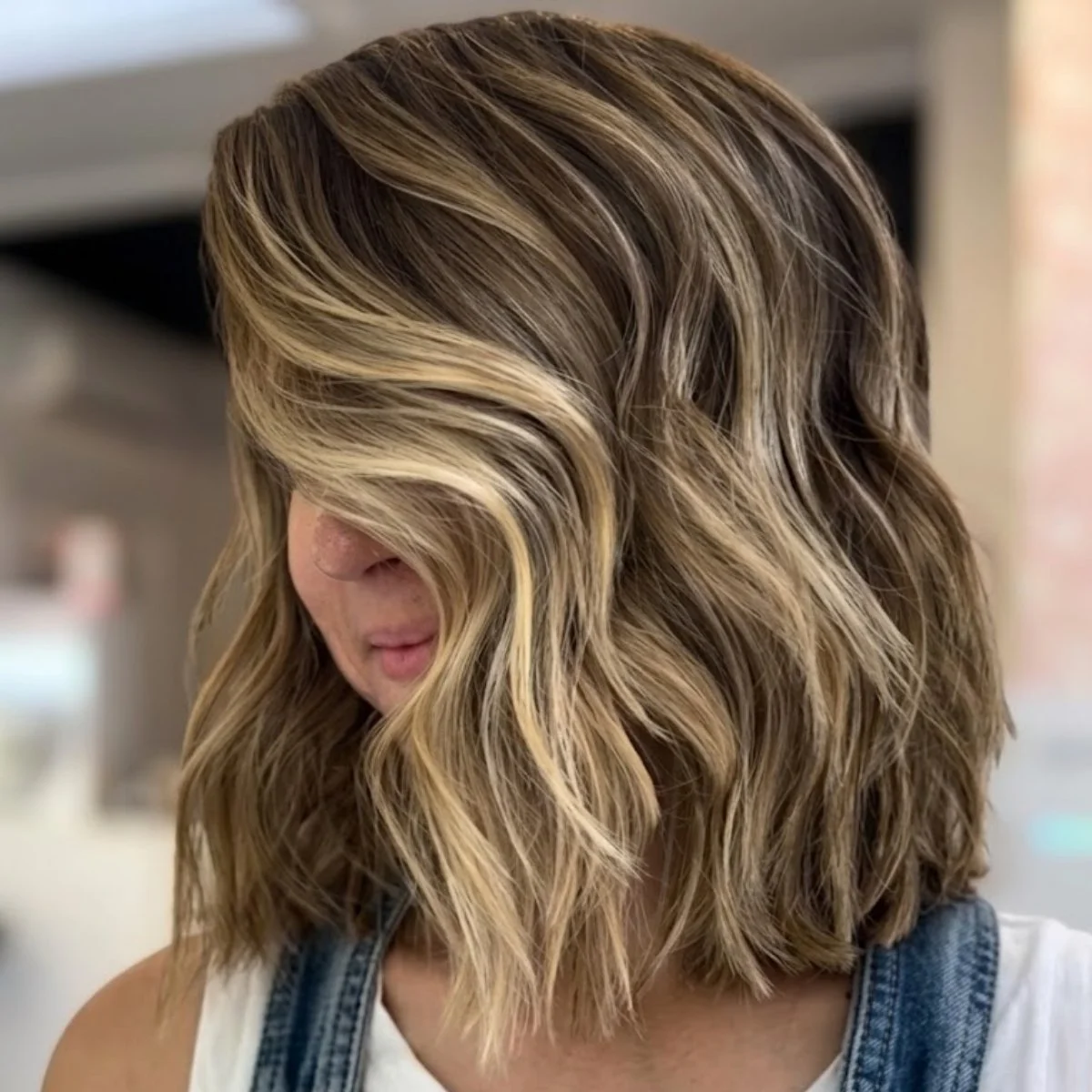
The Best Cut: A deep side-parted lob (long bob) with soft, face-framing pieces.
Why it works: An asymmetrical, deep side part breaks up the symmetry of a square face. Soft curls ending just below the jawline diffuse the sharpness of the jaw, giving the face a more relaxed, oval appearance.
Oval Face
Oval faces are incredibly versatile because their proportions are already naturally balanced. You can pull off almost anything, from a tight crop to waist-length spirals.
The Best Cut: Voluminous mid-length curls with uniform layers.
Why it works: Maintaining relatively consistent length with subtle layering from mid-shaft to the ends preserves your face's natural symmetry while maximizing the bounce and definition of your curls.
Heart-Shaped Face
Heart-shaped faces feature a wider forehead that tapers into a delicate, narrow chin. The goal here is to anchor the face by adding volume to the lower half.
The Best Cut: A curly pixie or a collarbone-length bob with side-swept bangs.
Why it works: A curly pixie with sweeping bangs frames the forehead, minimizing its width, while focusing attention on your cheekbones. If you prefer longer hair, a bob that hits right at the jawline adds necessary width to the lower face, balancing out the forehead perfectly.
Diamond Face
Diamond faces are angular, with narrow foreheads and jawlines, but prominent, wide cheekbones. You want a cut that adds fullness to the top and bottom of the face while softening the cheeks.
The Best Cut: Medium-length layered curls with side-swept bangs.
Why it works: Side-swept bangs add immediate width to the narrow forehead. By ensuring the heaviest layers fall around the chin and collarbone, you add necessary volume to the narrow jawline, creating a beautifully harmonious look.

— NENA, Master Curl Specialist at The Glam House
The Great Debate: Layered vs. Blunt Cuts for Curls
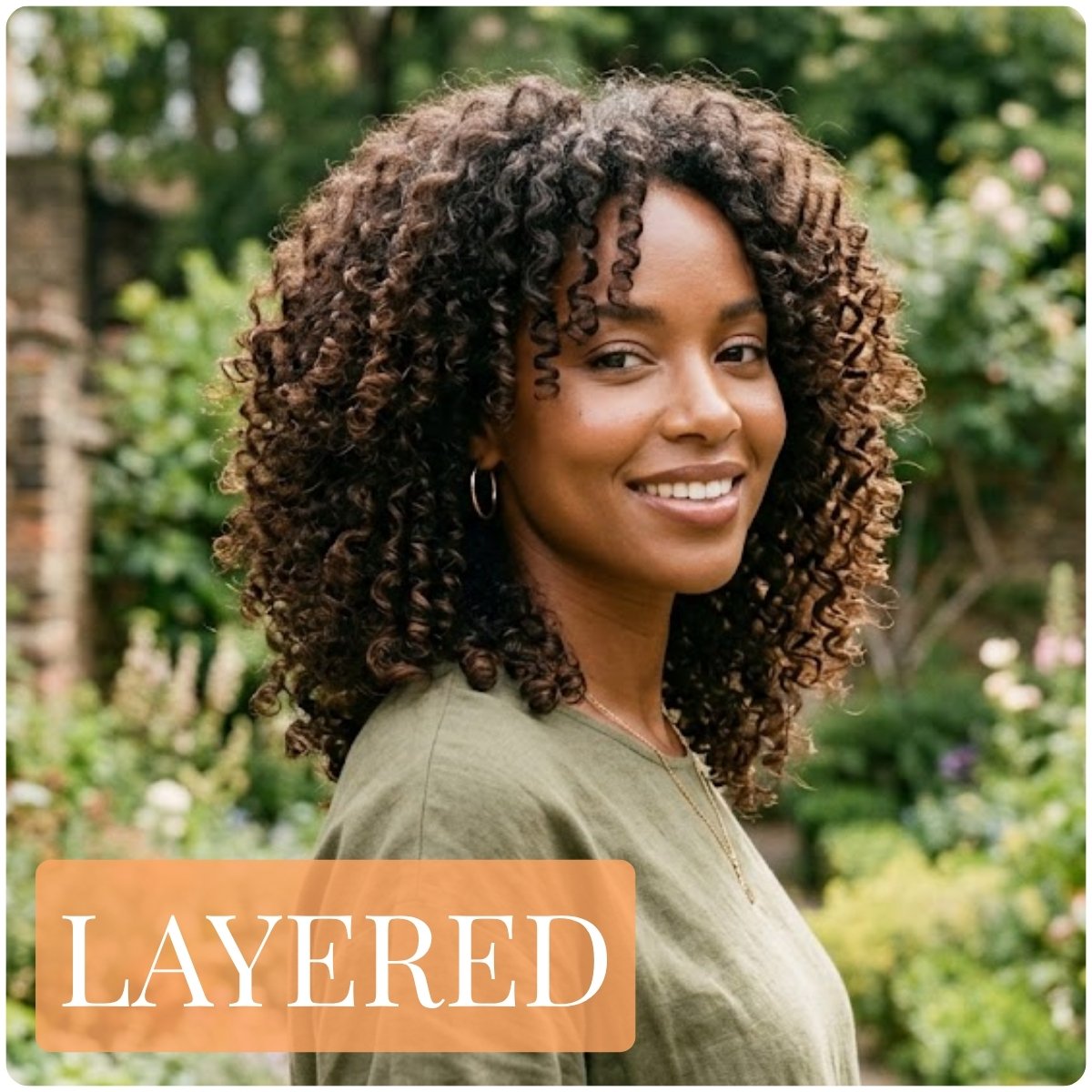
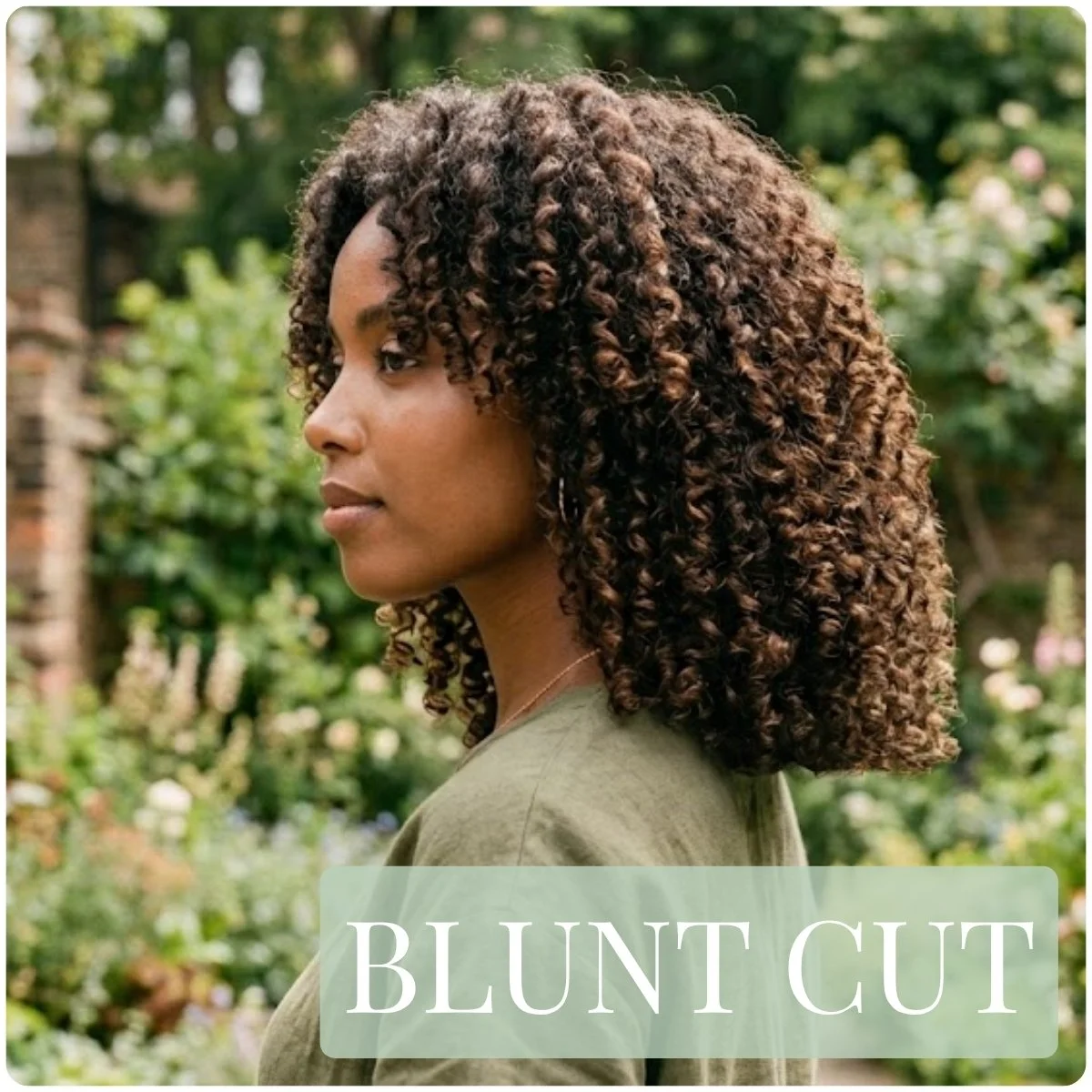
When you sit down with your stylist, you'll inevitably face this question. For curly hair, the cutting technique is just as important as the length.
Layered Cuts (The Curly Standard)
Layers are a game-changer for curly hair. By cutting the hair at varying lengths, you remove excess weight. This prevents the heavy "triangle effect" (where hair is flat at the roots and excessively wide at the ends) and allows your curls to spring up and form defined ringlets. If you have thick or tight curls, layers are almost always necessary.
Blunt Cuts (Proceed with Caution)
A blunt cut keeps all ends at the exact same length. While this looks incredibly chic and polished on straight hair, it can be risky for curls. Without layers to remove weight, blunt cuts pull curls down, stretching them out at the root and causing them to flare out at the bottom. The exception? If you have very fine, low-density curly hair, a blunt cut can actually create the illusion of thicker, fuller hair.
Rules for Maintaining Your Curly Cut
A great cut is only half the battle; how you treat it at home determines how it looks on day three.
Hydration is non-negotiable: Curly hair is structurally prone to dryness because the natural oils from your scalp have a harder time traveling down the coiled hair shaft. Use sulfate-free shampoos and rich, hydrating deep conditioners.
Ditch the traditional towel: Rough-drying your hair with a standard terrycloth towel shreds the hair cuticle and guarantees frizz. Use a microfiber towel or an old cotton t-shirt to gently "plop" or squeeze the water out.
Protect the shape at night: Sleeping on a cotton pillowcase creates friction that ruins your curl pattern and causes breakage. Sleep on a silk or satin pillowcase, or protect your cut by sleeping in a silk bonnet.
Diffuse, don't blast: If you use heat, always use a diffuser attachment on low heat and low speed. This mimics air-drying while setting the curl shape without blowing the hair apart.
Wrap Up!
Confidence is the best accessory you can wear. Finding a curly haircut that honors both your unique curl pattern and your facial geometry will save you time, reduce frizz, and let your natural texture shine. Book a consultation with a curl-specialized stylist for thebest women's haircut, bring your inspiration photos, and get ready to turn heads!


Frequently Asked Questions
-
Yes, in the vast majority of cases. Layers remove the heavy bulk that weighs curls down, allowing them to bounce up naturally. Without layers, thick curly hair tends to form an unflattering "pyramid" or "triangle" shape, lying flat against the scalp and poofing out at the bottom.
-
Avoid thinning shears at all costs. Thinning shears disrupt the natural clumping pattern of your curls, resulting in a frizzy, frayed look. Additionally, be wary of stylists who only cut curly hair while it is soaking wet and pulled perfectly straight. Curls shrink differently when dry, so a "dry cut" technique is usually much safer and more accurate.
-
A bad curly cut can lead to uneven shrinkage (where one side bounces up two inches higher than the other), a total loss of your natural curl definition, or excessive, unmanageable frizz. This is why it is crucial to seek out a stylist specifically trained in textured hair.
READ MORE…