How to Remove Hair Dye Safely: Quick and Easy Ways
Original published date: Oct 27, 2022
Major update date: jul 6, 2026
How do you remove hair dye from your hair safely? The best approach depends on whether your color is permanent, semi-permanent, or freshly applied. In many cases, unwanted dye can be faded or removed using gentle at-home methods such as clarifying shampoo, vitamin C treatments, baking soda mixtures, or oil treatments. When done correctly, these techniques lift excess color while protecting the health of your hair.
If your new color turned out darker, brighter, or completely different than expected, don't panic. Hair dye results vary based on starting shade, hair porosity, and the formulas used. The good news: you don't always need a costly salon correction right away.
In this guide, we cover 10 effective hair dye removal methods—from gentle DIY options to professional salon corrections—along with essential colorist safety rules to keep your hair strong and shiny.
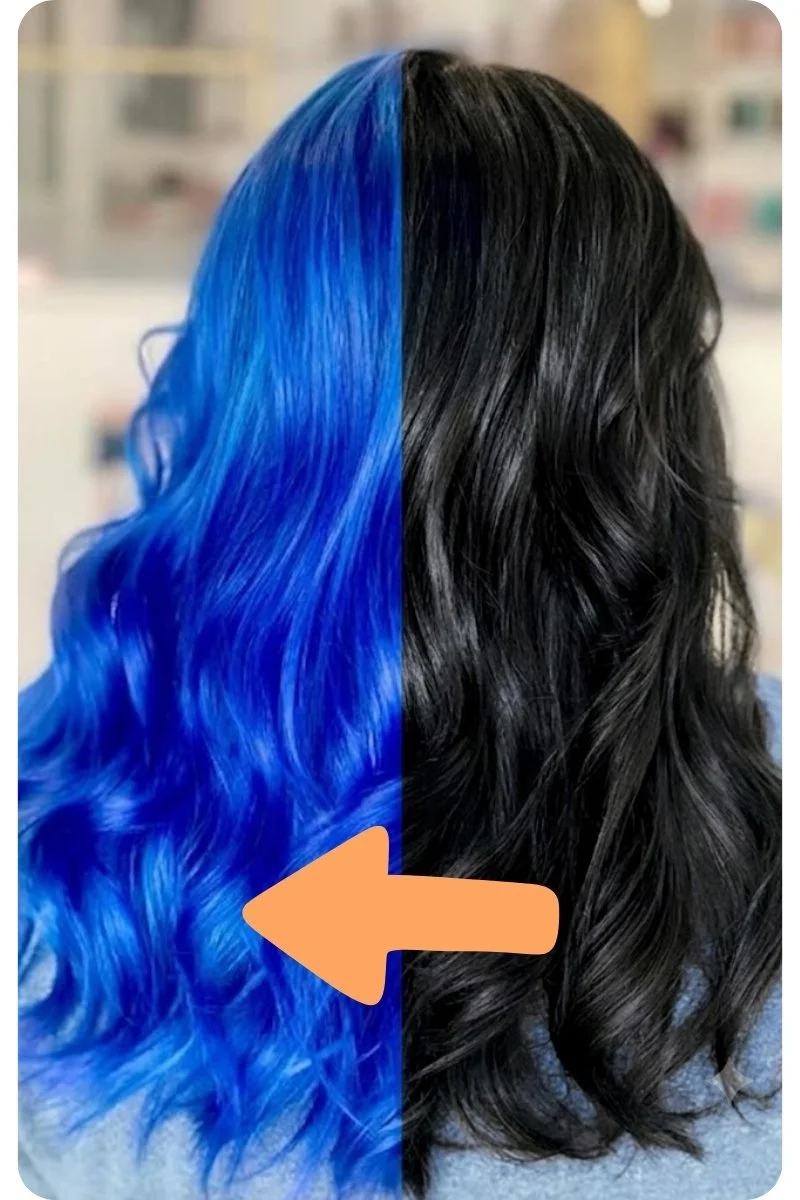
The Importance of Safe Hair Dye Removal
Finding the best hair color remover isn't just about speed; it's about preserving your hair's structural integrity.
Chemical hair treatments alter your hair's natural composition and degrade cortex proteins, as documented in research published in Frontiers in Medicine. Whether you're making a subtle tweak or a drastic change, harsh removal techniques can cause serious fallout, including extreme dryness, severe breakage, and split ends. Just as you wouldn't use bleach on silk, you shouldn't rush into aggressive stripping agents without a plan.
Safe removal methods prioritize moisture and cuticle health while protecting your scalp from irritation and chemical burns.
10 Best Hair Dye Removal Methods Compared
Before picking a method, use this quick guide to find the safest option for your specific hair dye type and situation:
| Removal Method | Speed of Results | Damage Risk | Best Used For |
|---|---|---|---|
| Clarifying Shampoo | Fast | Low to Medium | Semi-permanent & demi-permanent dyes |
| Baking Soda Paste | Moderate | Medium | Semi-permanent dyes |
| Vinegar Rinse | Slow | Low | Gentle, gradual fading over time |
| Vitamin C Treatment | Fast | Medium | Semi-permanent & fresh demi-permanent |
| Olive Oil Treatment | Slow | Very Low | Recently applied permanent dye (softening) |
| Lemon Juice Rinse | Moderate | High (Drying) | Subtle lightening of natural/dark tones |
| Hydrogen Peroxide | Fast | High | Spot treatments & extreme caution cases |
| Cinnamon & Honey Mask | Slow | Low | Subtle, natural lightening |
| Exercise & Sweat | Slow | Very Low | Gentle, gradual fading |
| Professional Salon | Very Fast | Low (in expert hands) | Permanent dyes, dark box dyes, color correction |
The 10 Best Hair Dye Removal Methods
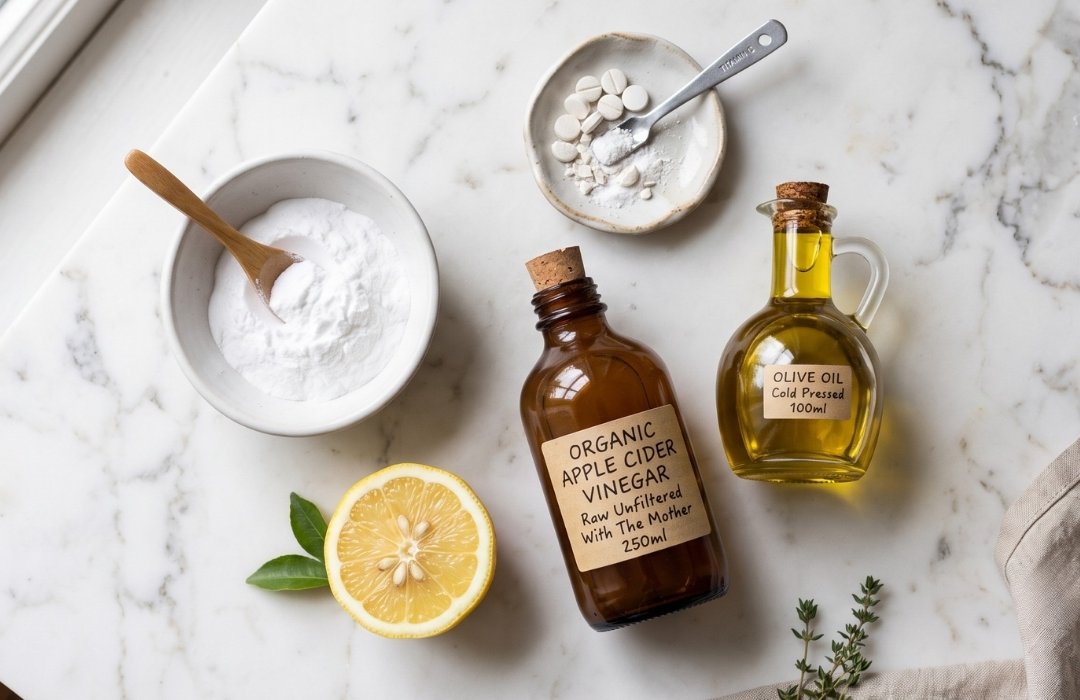
1. Use a Clarifying Shampoo
If you need to fade hair dye quickly, reach for a clarifying or anti-dandruff shampoo. These formulas act as a deep cleanse, breaking down surface-level artificial pigments.
How to apply: Massage thoroughly into wet hair and scalp, working into a rich lather. Let it sit for 3 to 5 minutes before rinsing.
Pro tip: Clarifying shampoos can strip natural surface lipids alongside dye molecules, according to the International Journal of Trichology. Always follow with a rich, nourishing deep conditioner and rinse with cool water to seal the hair cuticle.
2. Make a Baking Soda Paste
Baking soda is a mild abrasive and natural cleansing agent that works wonders for removing semi-permanent color.
How to apply: Mix equal parts baking soda and deep-cleansing shampoo (or water) to create a smooth paste. Gently massage it through damp hair, focus on the dyed areas, and let sit for 5 to 10 minutes.
Pro tip: Rinse thoroughly with cool water. Because baking soda is highly alkaline, it increases negative electrical charges on the hair shaft, raising the cuticle and increasing friction, according to theInternational Journal of Trichology. Always follow with an acidic rinse (like diluted apple cider vinegar) or a deep conditioner to restore your hair's optimal pH balance
3. Try a Vinegar Rinse
Apple cider vinegar naturally adjusts your hair's pH, balances the scalp, and breaks down dye molecules over time without lifting your underlying natural color.
How to apply: Mix 1 part vinegar with 2 parts water. After shampooing, pour the mixture through your hair and let sit for 3 to 5 minutes.
Pro tip: Rinse with cool water to smooth the hair shaft and add extra shine. Repeat 2 to 3 times a week for gradual fading.
4. Apply a Lemon Juice Rinse
Lemon juice contains natural citric acid, which acts as a gentle bleaching agent when combined with warmth or sunlight.
How to apply: Mix equal parts fresh lemon juice and water. Spritz or pour evenly over damp hair, leave on for 15 to 20 minutes, then rinse.
Pro tip: Lemon juice can be very drying. Always apply a deep-conditioning mask immediately afterward.
5. Hydrogen Peroxide (Use with Caution)
Hydrogen peroxide is a strong oxidative agent that chemically breaks down artificial pigment. However, because it alters the hair shaft, it carries a high risk of damage.
Caution: Never use hydrogen peroxide on hair previously treated with dark box dye containing metallic salts—this can cause a severe reaction resulting in immediate breakage or hair melting.
Safety guidelines:
Dilute always: Mix equal parts 3% hydrogen peroxide and water (1:1 ratio).
Do a strand test: Test on a small, hidden section near the nape of your neck before full application.
Avoid overuse: Limit application to avoid brittleness, severe dryness, and scalp irritation.
6. Crush Vitamin C Tablets
Vitamin C (ascorbic acid) lowers the pH of hair dye, causing the color molecules to expand, loosen, and wash away. This is one of the most effective DIY options for semi-permanent and demi-permanent dyes.
How to apply: Crush 5 to 10 Vitamin C tablets into a fine powder and mix with enough clarifying shampoo to form a paste. Apply evenly to damp hair, cover with a shower cap, and leave for 30 to 45 minutes.
Pro tip: Shampoo and condition thoroughly after rinsing.
7. Nourishing Olive Oil Treatment
Warm oil relaxes the hair cuticle and helps pull out fresh, non-permanent dye molecules without causing damage.
How to apply: Gently warm a generous amount of pure olive oil (or coconut oil). Apply thoroughly from roots to ends, cover with a shower cap, and leave on for 1 to 2 hours (or overnight).
Pro tip: To easily wash out the oil, apply shampoo directly to dry, oiled hair before adding water to break down the grease smoothly.
8. Cinnamon and Honey Mask
Honey naturally produces trace amounts of hydrogen peroxide when mixed with liquid, while cinnamon acts as a natural booster.
How to apply: Mix 2 tablespoons of honey, 2 tablespoons of cinnamon, and 2 tablespoons of your favorite conditioner into a paste. Apply to damp hair, wrap in a shower cap, and leave on for at least 2 hours (or overnight).
Pro tip: This method is subtle and best suited for gentle, multi-session lightening that leaves hair smelling great and feeling soft.
9. Exercise and Natural Sweat
Physical activity aids color fading naturally. Sweat contains natural salts that loosen dye bonds, and working out outdoors exposes hair to mild UV fading.
Pro tip: Always rinse hair immediately after a workout to prevent salt buildup from drying out your scalp.
10. Consult a Professional Colorist
When DIY methods aren't enough, or if you're dealing with stubborn, dark permanent dye, it's time to see a professional.
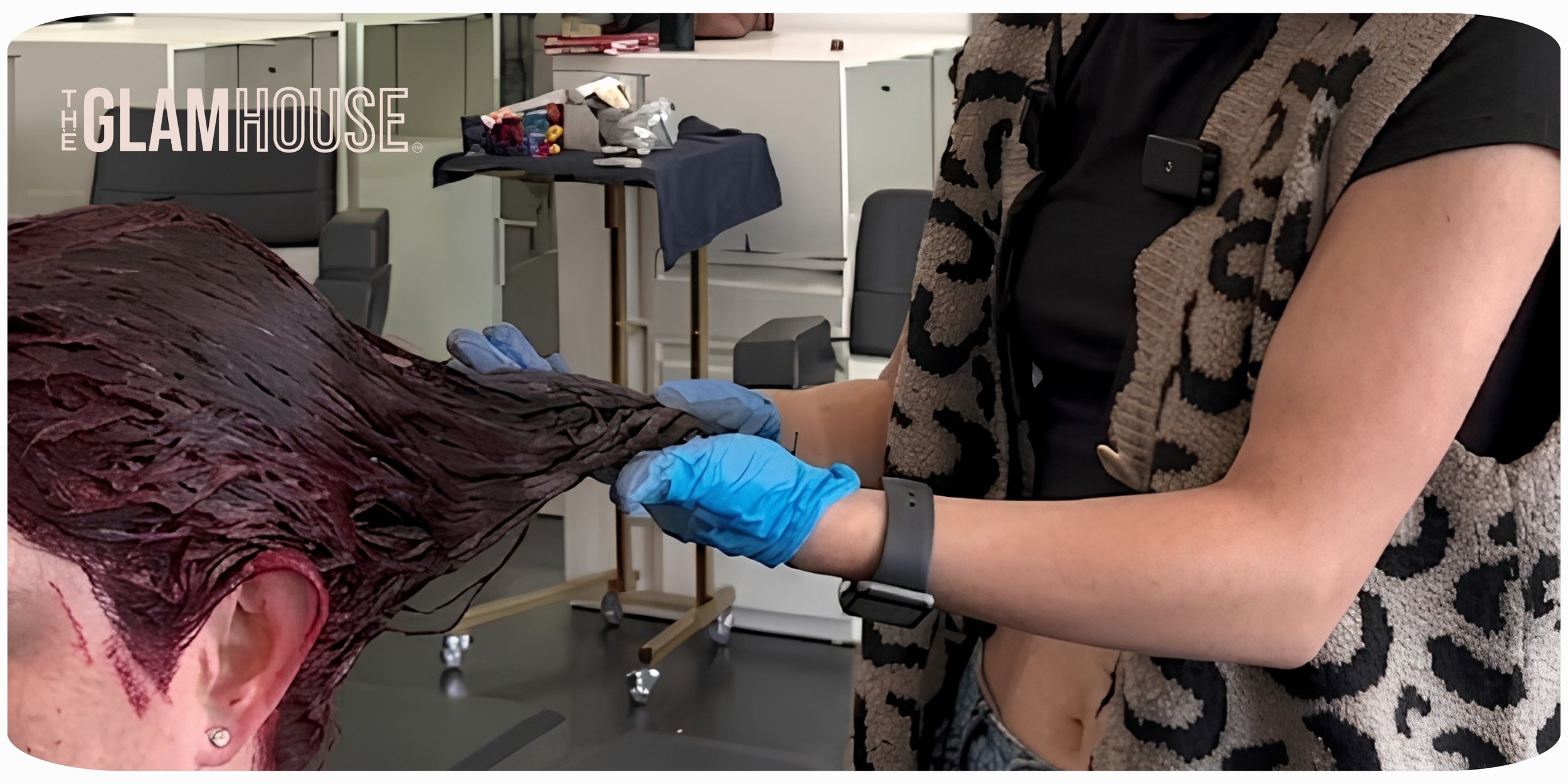
Stylists who specialize in professional hair coloring services have access to specialized, non-bleach color reducers that shrink artificial pigment molecules so they rinse away without altering your natural underlying hair color. A licensed colorist can evaluate your hair's porosity, current health, and color history to choose the safest path forward.
If a gentle DIY wash doesn't work after two tries, stop. Professional hair coloring services use bond builders and specialized color reducers that shrink and flush artificial pigment without destroying your hair's natural structure." — Brooke, Senior Master Colorist at The Glam House
What to Expect at a Salon Correction
If you decide to book a consultation at the best hair salon, here is how the professional correction process usually works:
Professional Expertise: A colorist assesses your hair structure to determine whether a sulfur-based color reducer, a mild bleach wash, or a targeted toner is the safest option.
Custom Formulations: Salons use bond-building treatments alongside strippers to minimize damage during the service.
Consultation & Pricing: Costs vary depending on hair length, density, and the number of sessions required. Always book a consultation first to receive an accurate quote and realistic expectation of results.
Frequently Asked Questions
-
The fastest DIY method is applying a crushed Vitamin C and clarifying shampoo mask. For dark, permanent dye, the fastest and safest route is booking a professional salon color correction session.
-
Avoid oxidative agents like bleach, hydrogen peroxide, or prolonged sun exposure with lemon juice. Instead, stick to surface-cleansing methods like clarifying shampoos, hot oil treatments, or sulfur-based color removers that only target artificial pigments.
-
Frequent Washing: Sulfates and hot water open the cuticle and wash away pigment.
UV Light Exposure: Sunlight breaks chemical dye bonds over time.
Heat Styling: Blow dryers, flat irons, and curling wands open the cuticle, allowing color molecules to escape.
Chlorine: Pool chemicals strip both moisture and artificial color rapidly.
READ MORE…